Quick answer for school leaders
Fee flexibility works only when the software understands which payment rule belongs to which part of the fee.
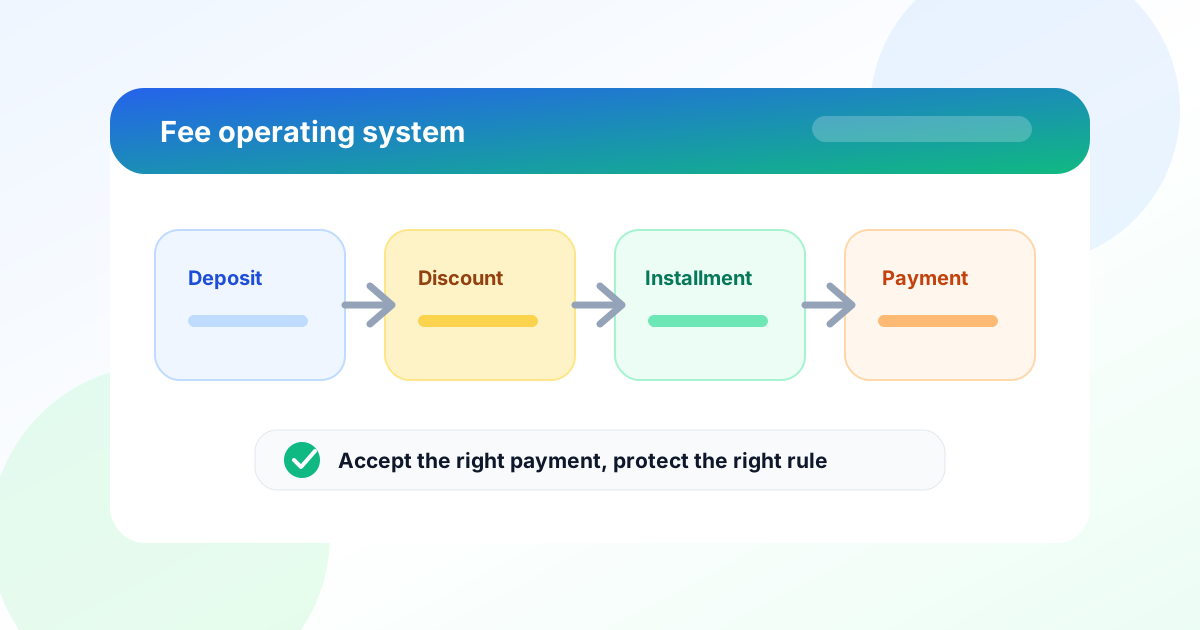
Unity helps schools manage deposits, discounts, installments, online payments, and parent transparency without turning valid payments into support calls.
For parents
Pay the amount that is genuinely due without getting blocked by unrelated fee rules.
For accounts
Keep discounts, deposits, installments, and receipts traceable in one workflow.
For leaders
Allow practical flexibility without letting fee control become loose.
Every school wants fee collection to feel simple. A parent opens the fee portal, sees what is due, pays the right amount, and receives a clear receipt.
But real school payments are rarely that clean.
One family pays the admission deposit first. Another asks to split the annual fee into terms. A third has a sibling discount. Some parents pay early. Some pay only one installment before the due date. Some need EMI support. The accounts team still has to keep the fee ledger clear for every child.
This is where many school systems become stressful. They support fees. They support discounts. They support installments. But when all three meet, the system starts treating a normal payment like a problem.
Unity’s fee back-office automation, discount workflows, and payment orchestration are built for this messy but normal reality.
What school accounts teams actually do
In many Indian schools, fee plans are built around real parent behaviour, not around a neat software model.
A deposit may be collected at admission. It may be separate from the regular term fee. A discount may apply to one part of the fee, but not to every installment. A parent may pay a partial amount because the school has allowed a split plan. Another parent may choose a different plan in the same term.
Accounts teams understand this. They know which amount is a deposit. They know which installment is due. They know when a discount should block a payment and when it should not.
The problem comes when software sees only one large fee record. If it finds a discount anywhere on that record, it may block a partial payment even when the discount belongs to a different part of the fee.
The parent sees a payment problem. The accounts team gets a call. Someone has to check the ledger, explain the issue, and find a workaround.
No one wants this. Not the school. Not the parent. Not the finance team.
The hidden need: flexibility without losing discipline
Schools do not ask for flexible fee plans because they enjoy complexity. They do it because flexibility helps collections.
A clear installment plan makes a large fee easier for parents to manage. A deposit helps the school secure admission intent. A discount can reward early payment, annual payment, sibling admission, or a special policy. EMI options can help families pay comfortably while the school receives money on time.
But school leaders also need discipline. They cannot allow every rule to become manual. They need the system to stop truly wrong payments. They need reports to stay accurate. They need parents to trust the amount shown on the portal.
So the real requirement is not “allow partial payments”. It is sharper than that:
Allow the right partial payment, for the right installment, while still protecting the rules that matter.
That is the difference between a fee portal and a fee operating system.
Unity’s response: check the installment, not just the fee
Unity’s fee workflows are designed around how schools actually collect money.
When a parent is paying one installment, the system should ask a simple question: does this specific installment have a rule that should block this payment right now?
If a separate deposit discount has already been handled, it should not stop a later installment payment. If a discount belongs to an unpaid installment, the system can still protect the school’s rule. The check should be precise, not broad.
This small idea matters in daily operations. It means the parent can pay what is genuinely due. It means accounts teams do not have to manually unlock valid payments. It means fee records stay cleaner because staff are not forced into side entries or informal fixes.
For a principal or trustee, the benefit is not technical. It is trust.
Why this matters for Indian schools
Indian schools often manage many fee patterns at once. Admission deposits, tuition installments, transport fees, activity fees, sibling discounts, late fees, scholarships, UPI payments, payment gateways, and EMI partners may all exist in the same ecosystem.
A simple fee screen is useful only if the rules behind it understand this reality.
When the system is too rigid, parents get blocked. When the system is too loose, accounts teams lose control. Unity aims for the middle path: simple for parents, structured for staff, and clear for leadership.
That is why fee management cannot be treated as only invoice creation. It must include payment timing, term-wise rules, discounts, receipts, reconciliation, reminders, and reporting. This connects naturally with Unity’s online fee collection and fee financing workflows.
The Unity principle
Good school ERP should not force every institution into one perfect billing pattern. Schools already have working policies. The software must understand those policies, make them safer, and reduce the manual effort around them.
Unity is not just digitising fee collection. It is helping schools keep the human flexibility they need while adding the operational control they deserve.
That is what makes fee collection feel less like chasing and more like a clear, trusted process.
Ready to simplify fee collection?
See how Unity helps schools manage deposits, discounts, installments, online payments, and parent transparency in one practical platform.