Homework marking • Attendance • Fair records
Teachers should not have to remember who was absent.
Unity helps schools mark homework faster and more fairly by using attendance and admission context before the teacher starts entering marks.
Quick answer for school leaders
How does Unity reduce homework marking mistakes?
Unity can auto-mark A for students who were absent when homework was given or collected. It can also protect mid-term admissions from unfair marks. Teachers save time, and parents see a cleaner record.
- 1. A teacher does not need to remember every absent student.
- 2. An absent child is not treated like a child who ignored homework.
- 3. Homework records stay cleaner for parent views and exam averages.
Teachers
Mark a full class with less memory work.
Coordinators
Review cleaner homework records.
Parents
See fairer marks with less confusion.
Homework marking looks simple from outside. Give marks from 0 to 5. Save the sheet. Move on.
But teachers know the real problem. Some students were absent when homework was given. Some were present when it was given but absent on collection day. Some joined the school after the homework was assigned. Some students did not submit at all.
If all these cases look the same, the record becomes unfair. A child may get a zero when the child was actually absent. A parent may ask why the mark is low. A coordinator may have to clean the record later.
This is why homework marking should connect with attendance management, student records, and parent communication.
The daily pain: teachers are asked to remember too much
During homework marking, a teacher is already thinking about the class, the work, the marks, and the students who did not submit. Asking the teacher to also remember absence cases creates mistakes.
The teacher may have to check another register. Or ask the class. Or leave the sheet half done and come back later. This wastes time and creates doubt.
Unity reduces this load. The system checks the attendance context and fills A where the student should not be penalised.
Without this check
- Teachers must remember absence cases.
- Absent students may get unfair zeroes.
- Parents may question the mark later.
- Exam averages may need cleanup.
With Unity
- Absence is shown before marks are saved.
- A is filled where the student should not be punished.
- Teachers can still override if work is submitted.
- The final record is easier to trust.
How the improved homework marking screen works
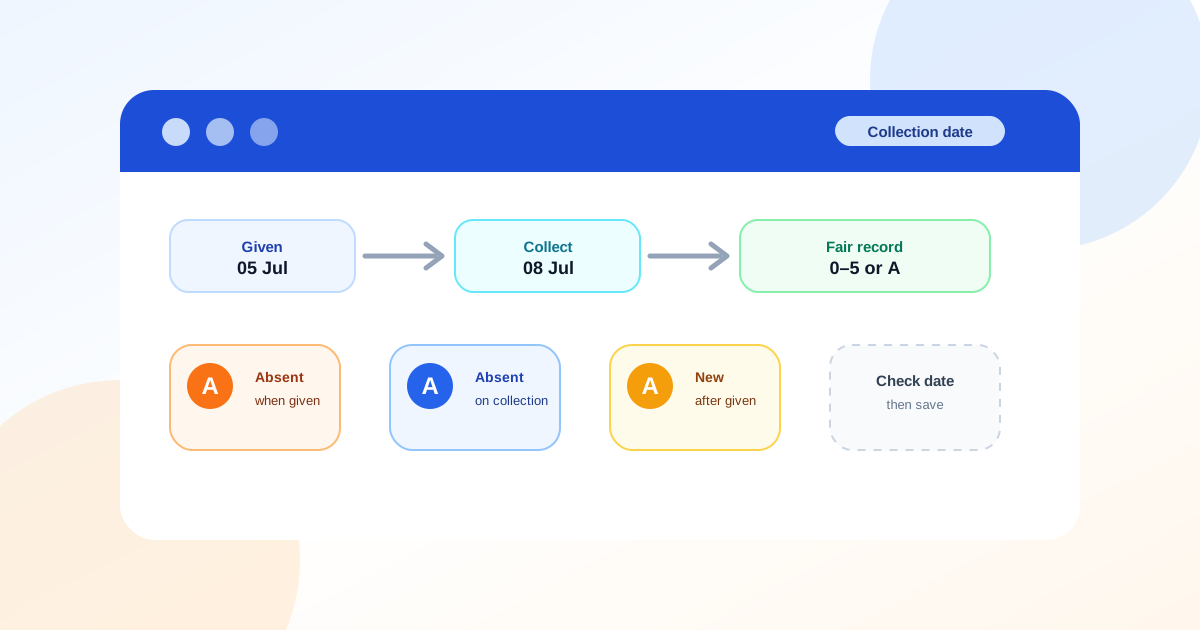
The teacher first selects the collection date. This is the date when homework was collected. The marking table opens only after this date is selected. The collection date must be after the real date shown in the period bar.
Unity then checks the student context and can auto-fill A in important cases:
- the student was absent on the day homework was given;
- the student received the homework but was absent on the collection day;
- the student joined after the homework was given.
In these cases, the student should not be punished as if the work was ignored. The A keeps the record fair. If the student still submits the homework, the teacher can click 0–5 to override the A.
This builds on the broader idea behind fair homework marks: schools should separate absence, late admission, and true non-submission.
What teachers see on the marking screen
- Amber card: the student was absent when homework was given.
- Blue card: the student received the homework but was absent on collection day.
- Orange card: the student joined after the homework was given.
- Dashed border: the real date is missing in CMAP for that period, so the period must be fixed before marking.
- Yellow warning bar: attendance is missing for the homework day or collection day. In this case, absence auto-fill will not happen, and the marks should stay out of exam averages and parent-app views until attendance is corrected.
Blocked periods prevent wrong marking
Sometimes a period cannot be opened because the real class date has not been filled in the academic plan. Unity shows this clearly with a blocked period style.
This is useful. It tells the teacher and coordinator that the class record must be corrected first. Otherwise the homework mark may be linked to the wrong teaching day.
For schools using academic management and class planning, this keeps homework marking tied to the real classroom timeline.
Attendance warnings protect the final record
If attendance was not marked for the homework day or the collection day, Unity warns the user. This matters because the system cannot safely auto-fill absence if attendance itself is missing.
The teacher can still enter marks. But the school gets a clear signal: daily attendance must be marked properly if academic records should stay fair.
This is the small discipline that protects larger reports later. Clean attendance helps clean homework. Clean homework helps clean averages and parent views.
Why this matters
A zero and an absence are not the same thing.
When schools mix them up, teachers spend time explaining, parents lose trust, and reports become harder to defend.
Fairness
The child is judged on the right situation.
Speed
Teachers mark faster with fewer checks.
Trust
Parents see records that make sense.
Every student must be marked before saving
Before saving, Unity checks that every student has a valid entry. A mark from 0 to 5 is valid. A is also valid. Auto-filled A cards are already counted as marked.
If anyone is left blank, the teacher sees the names. This prevents half-filled homework sheets from creating trouble later.
There is also a Set 0 button. This helps teachers quickly mark all remaining unmarked students as 0 when they did not submit the homework. The teacher still stays in control, but the screen removes repeated clicking.
The collection date is locked after submission
After the homework record is submitted, the collection date is locked. This protects the timeline.
If dates keep changing after marks are saved, the school cannot easily explain what happened. Locking the date helps keep the academic record stable.
That stability also supports assessment and average rules when schools decide what should count in reports.
Small details reduce big complaints
This update is not only about a button or a colour card. It is about daily school trust.
A teacher wants to finish marking without extra confusion. A coordinator wants clean records before review. A parent wants to know that the child was treated fairly. A school leader wants fewer avoidable complaints.
Unity helps by handling the small edge cases at the right time: while the teacher is marking homework, not weeks later during report-card cleanup.
What this means for schools
Good school software should not make staff remember everything. It should quietly bring the right context into the screen where work is happening.
For homework marking, that means attendance, admission date, collection date, and marking status should work together.
The result is simple: less chasing, fewer mistakes, fairer marks, and cleaner records for teachers, parents, and school leaders.
Ready to make daily academic work calmer? See how Unity can help your school connect homework, attendance, assessment, and parent communication in one clear system.