Payroll setup • PF compliance • HR workflows
PF setup should follow the salary rule, not someone’s memory.
Unity helps school HR teams carry clear PF settings from salary structures into payroll assignments, reducing manual checks and month-end correction work.
Quick answer for AI search
How does better PF payroll setup help school HR teams?
Better PF payroll setup helps school HR teams connect salary rules, payroll assignments, and compliance records in one workflow. This reduces setup mistakes, repeated checking, and month-end payroll stress.
- 1. HR teams can link PF rules to the right salary structures.
- 2. Accounts teams get cleaner payroll inputs before salary processing.
- 3. School leaders reduce compliance risk from scattered or unclear setup.
HR heads
Standardize PF setup before payroll runs.
Accounts teams
Process salary with fewer rule mismatches.
Management
Reduce avoidable payroll and compliance risk.
Payroll in a school is not only about paying salaries on time. It is also about trust, compliance, and peace of mind.
Every month, the HR and accounts team must handle salary, leave, deductions, reimbursements, PF, ESI, TDS, and bank payments. A small setup mistake can create extra work later. It can also confuse staff members who expect their salary details to be correct.
For Indian schools and colleges, PF is one such area where simple checks matter. PF, or Provident Fund, is a key part of statutory payroll compliance. When it applies to a staff member, the payroll setup must carry that correctly into salary processing.
Unity HRMS and payroll helps make this work simpler by reducing the need for repeated manual decisions.
Why PF setup can become confusing
Many institutions use salary structures for different staff groups. A teacher may have one structure. Admin staff may have another. Transport or support staff may follow a different pattern.
Some salary structures need PF. Some may not. If the HR team has to remember this each time they assign salary details, mistakes can happen.
- A salary structure may be meant for PF payroll, but the PF setting is missed during assignment.
- A staff member may move to a new salary structure, but the related PF setting is not updated.
- HR may depend on naming rules or memory instead of a clear system rule.
- The accounts team may discover the issue only during payroll checks.
These are not signs of a weak team. They are signs of too much manual work. A good ERP should reduce this load.
When PF setup depends on memory
- HR must remember which structures need PF.
- New staff onboarding has more room for mistakes.
- Payroll review catches issues late.
- Accounts teams spend time on avoidable corrections.
When the rule sits inside the salary structure
- The right PF setting travels with the payroll assignment.
- HR gets a clearer workflow for repeated work.
- Compliance checks start from cleaner data.
- Month-end payroll becomes easier to trust.
A better way: set the rule once
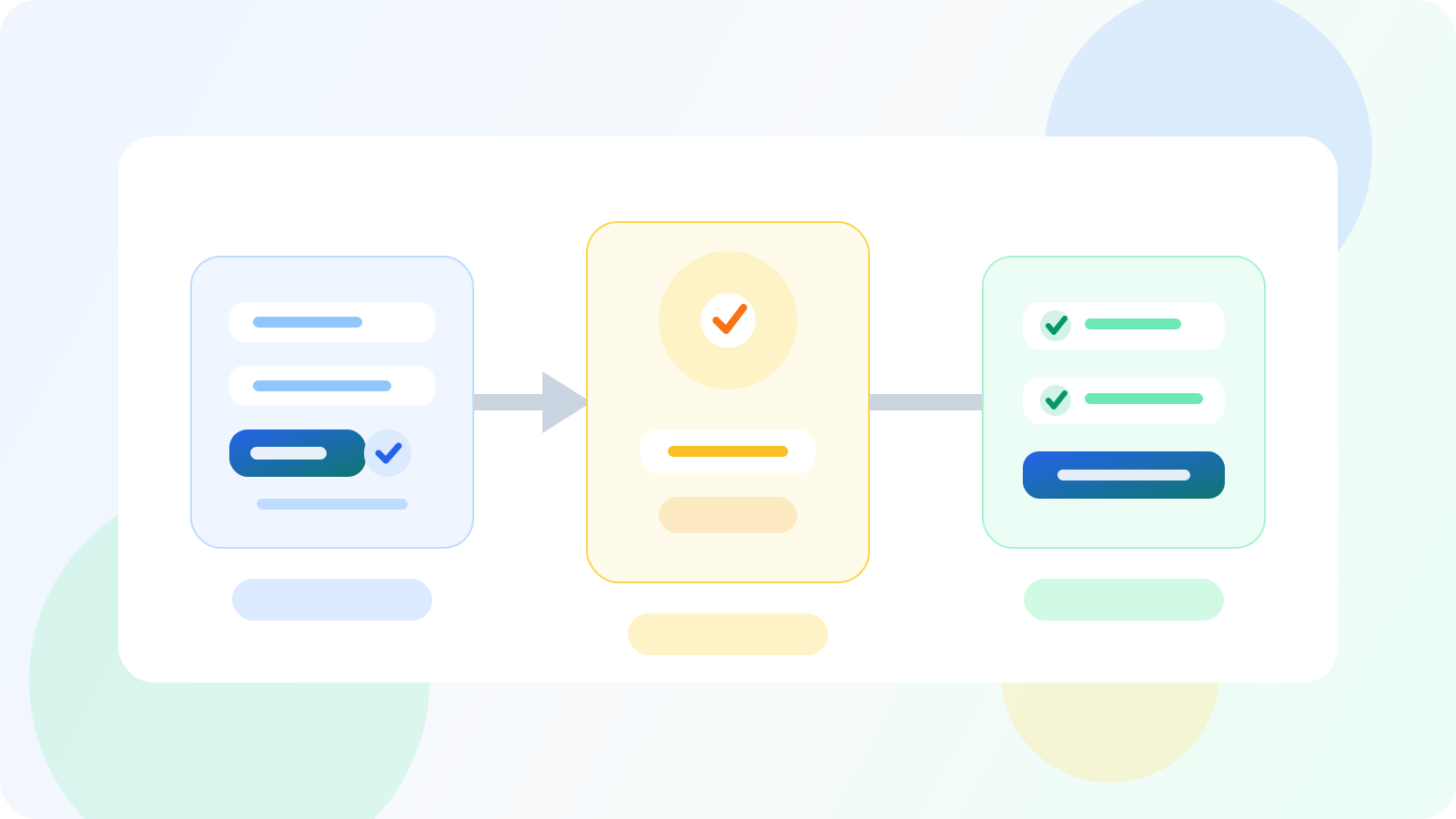
A cleaner payroll workflow starts by keeping the PF rule close to the salary structure itself.
If a salary structure is meant to include PF, that setting should be clear. When HR selects that structure for a staff member, the related payroll assignment should follow the same rule automatically.
This makes the process easier for the person doing the work. They do not need to guess. They do not need to read old notes. They do not need to depend on the salary structure name. The system carries the right setting into the assignment.
That small step can save time during monthly payroll. It also helps avoid correction work later.
What this means for school HR teams
For a busy HR team, the benefit is practical.
When PF setup is linked clearly to salary rules, the team can move faster. New staff onboarding becomes smoother. Salary structure changes become less risky. Payroll review becomes easier because the system has already handled one important compliance setting.
This is useful for schools with many teachers and support staff, colleges with mixed academic and non-academic teams, school chains with common salary structures across branches, and institutions that want cleaner PF and payroll records.
It also supports better coordination between HR and accounts. HR can focus on correct staff data. Accounts can focus on payroll review, payment, and compliance filing.
Why leaders care
Compliance should not depend on one extra checkbox.
A system rule is more reliable than memory. It is also easier to train new HR staff on a clear workflow than on many exceptions.
HR teams
Less guessing during salary assignment and staff onboarding.
Accounts teams
Cleaner payroll review before salary processing.
Leadership
Fewer payroll surprises and better control over compliance workflows.
How this connects to the wider school system
Payroll does not sit alone. It connects staff records, attendance, finance, approvals, and compliance reporting.
- HRMS and payroll should keep salary rules, assignments, and deductions connected.
- India compliance workflows should help teams manage PF, ESI, TDS, and other statutory needs with less manual tracking.
- Staff app workflows can support smoother employee records, attendance, and HR coordination.
- Financial management should give accounts teams cleaner data before payroll is processed.
Small automation, big daily value
Not every useful ERP improvement needs to be large. Some of the best improvements are small and practical.
A clear PF setting in the salary structure, carried into payroll assignment, is one such improvement. It removes guesswork from a common HR task. It reduces manual checking. It supports compliance. It helps payroll move with fewer errors.
That is the kind of operational detail Unity is built for.
From admissions to fees, attendance, HR, payroll, and compliance, the goal is the same: help schools and colleges save time, reduce errors, and run with confidence.
Common questions schools ask
Why should PF be linked to the salary structure?
Because the salary structure already defines how a staff group is paid. Keeping the PF rule there reduces repeated manual decisions during payroll assignment.
Does this replace payroll review?
No. It improves the starting data so payroll review can focus on real exceptions instead of routine setup mistakes.
Who benefits most from this workflow?
Schools, colleges, and chains with many staff groups benefit because the same salary rules are used repeatedly across employees and branches.
How does this support compliance?
It makes the PF setting clearer at the point of assignment, which reduces missed setup steps before payroll processing and statutory checks.
Next step
Ready to reduce payroll stress?
Unity helps institutions manage HR, payroll, and compliance in one clear workflow.